
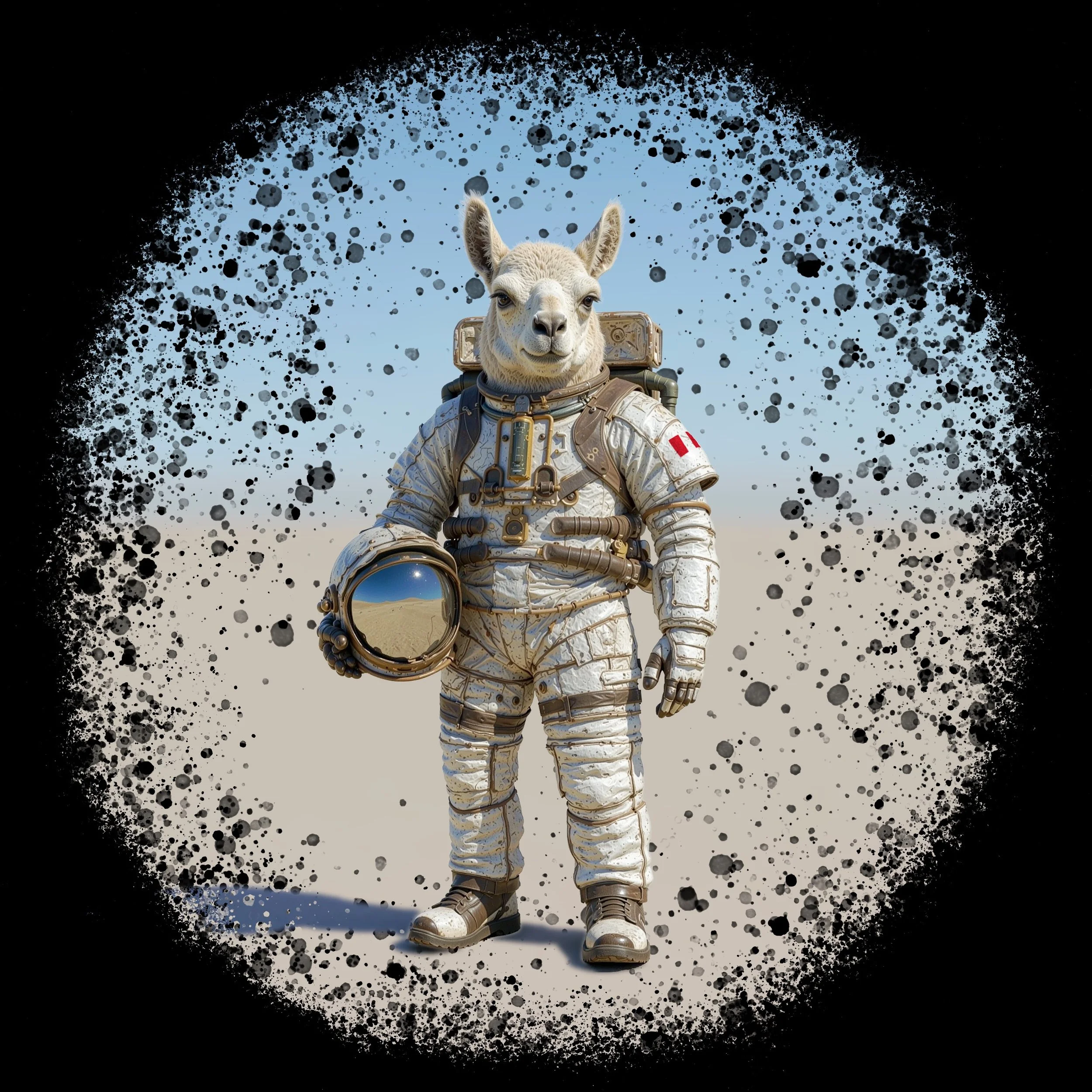
Dalai the Llamanaut
By Martin Fernandez
As we edge closer to humanity’s return to the Moon with the Artemis II mission, it’s hard not to feel a familiar mix of awe and curiosity—the same feeling that once made space feel impossibly distant and somehow deeply personal at the same time. I was three years old when humans first landed on the Moon. It happened within my lifetime, but my memories of it are vague—more inherited than experienced, shaped by photographs, recordings, and the stories my father passed on to me from that moment in history. In a strange way, that long pause has spanned my entire life, making this return feel more like a rediscovery than a continuation.
We’re also living in a moment that feels unsettled in familiar ways. Questions about who belongs, whether opportunity is “given” or earned, and whose stories endure have surfaced again, echoing earlier eras when progress was real but uneven, and often hard-won.
Which is where a llama enters the picture.
Dalai the Llama[naut] was never meant to represent any one person, place, or identity. Making Dalai a llama felt deliberately whimsical—and deliberately extreme. An astronaut is already a symbol that lives beyond borders and capability; a llama pushes that abstraction even further, stripping away expectations around color, ethnicity, and the many categories we’re quick to sort ourselves into. The name, too, is intentional. Dalai is a quiet nod to knowledge, persistence, wisdom, peace, compassion, hope, and continuity—not as lofty ideals, but as traits worth carrying forward and aspiring to, regardless of who we are or where we go next.
Against that backdrop, this felt like the right moment to finally share a story I’ve been quietly working on for some time: the story of Dalai the Llama[naut]. What began as a piece of artwork for a trail celebration has grown into something more reflective—a way to think not only about my own modest bikepacking explorations, but also about representation, and how the paths we travel on Earth shape how we imagine the ones beyond it. A journey of self-reflection.
Like most journeys that eventually reach improbable places, Dalai’s didn’t begin with space at all.
Dalai didn’t grow up dreaming about anything extraordinary. He simply grew up focused on the same small, daily tasks that shape anyone trying to move forward.
In the Sacred Valley of the Andes, the road between home and the day-to-day was less a road than a suggestion—dusty, uneven, sometimes washed out, often steep. Walking it took too long. When Dalai inherited a bike, he learned quickly that riding demanded balance, patience, and a willingness to fall and get back up again. He learned all three early, pedaling a mountain bike through terrain that rewarded momentum and punished hesitation.
That bike wasn’t a hobby. Dalai’s rides grew longer each day, along the way he discovered “long cuts”—slower routes that brought an unexpected steadiness to his life. Anyone who’s spent enough time on a bike knows those routes—the ones that take more time and effort, but somehow leave you better for having chosen them. More than transportation, the bike gave him clarity and independence. It carried books, groceries, and the quiet weight of expectation that comes with being the first in a family to aim beyond those before him. It also asked something simple of him: to show up, to move forward, to do what was in front of him without excess. Those daily rides shaped more than his love for the bike; they formed a habit of measured engagement—a way of meeting the world that would later make much larger journeys possible.
-
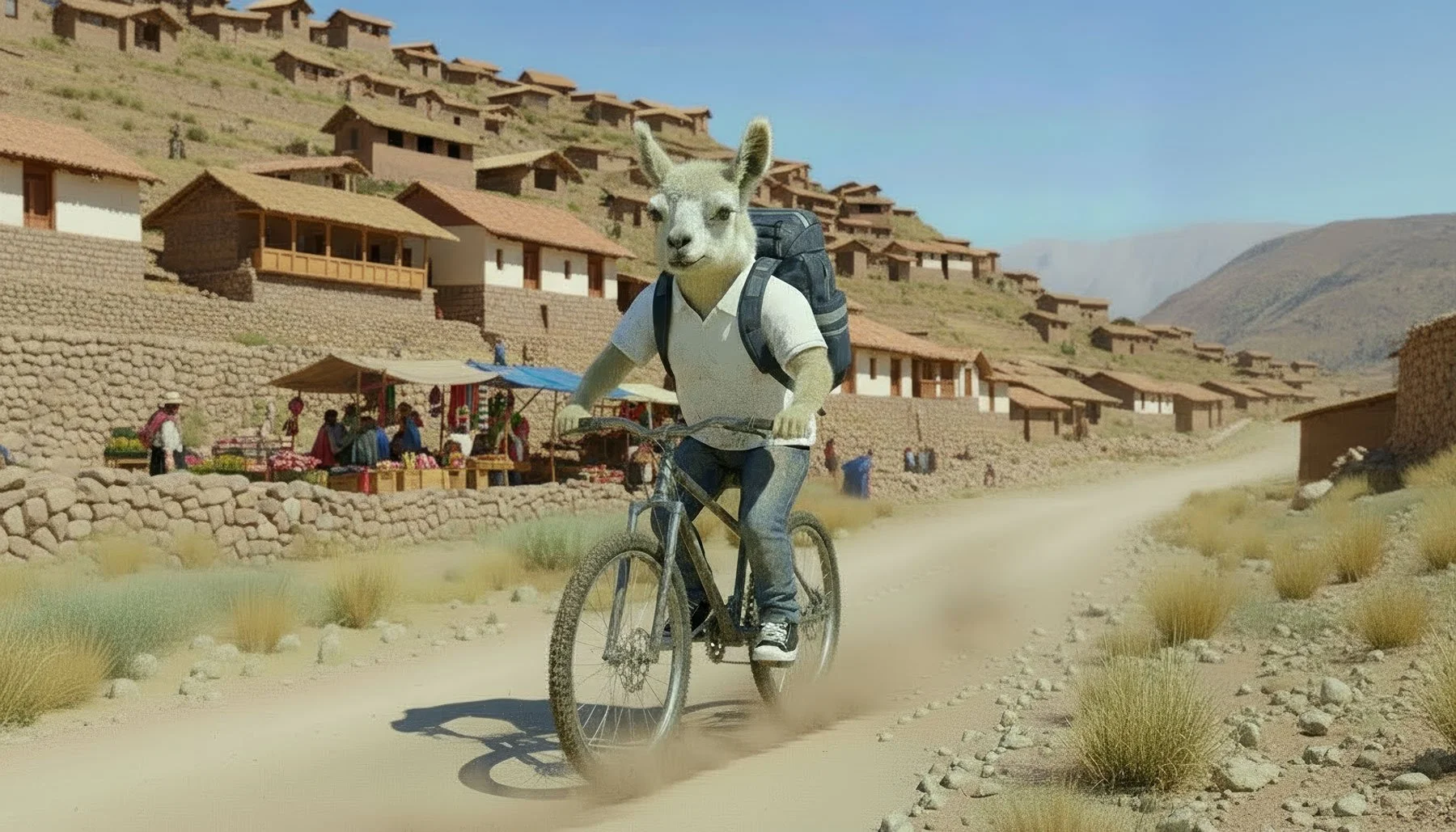
One pedal stroke at a time, the Sacred Valley was both classroom and proving ground.
Long before he understood orbital mechanics or flight envelopes, Dalai understood this: progress is earned one pedal stroke at a time. Not through urgency or ambition alone, but through showing up daily. The bike taught him that effort, applied steadily, compounds quietly. Some days the road was short; other days it stretched on without promise of ease. The work, however, remained the same. Over time, that rhythm became instinct—a habit he would apply to all his endeavors.
The bike carried Dalai from elementary and secondary school to the regional university. The physical and mental habits he developed during those early days earned him opportunities he never imagined and opened doors he hadn’t planned on. Travel still meant riding, but the landscape changed; even then, while studying engineering, he was fixing flats and tuning derailleurs just outside the lecture hall. It’s a familiar scene to anyone who’s tried to balance riding, work, and whatever comes next.
There’s a tendency to romanticize humble origins like this, to smooth them into a tidy story of grit. We’ve all heard—maybe even told—the versions that start with, “When I was your age…” The real stories are messier. Dalai struggled. The very work that opened doors also put him in rooms where he stood out, where he wasn’t quite like everyone else. He questioned whether he belonged there at all. He watched others move forward with advantages he didn’t have and wondered, more than once, whether effort alone would ever be enough.
But the bike had already taught him something important: endurance and sustained effort matter over long distances.
Dalai didn’t chase lofty goals. For him, it wasn’t about urgency or ambition. It was about showing up and doing what the moment required. The work stayed the same as it had been at home in the Valley. Pedal. Breathe. Keep moving. Stay upright. Stay balanced. The same habit he would carry into everything that followed.
When he discovered aviation—first through textbooks, then through a scholarship that put him in a cockpit for the first time—it felt familiar. Flying, like riding, demanded awareness, precision, and respect for forces you could never fully control. You didn’t dominate the air; you learned to move with it and through it—lessons first learned on rocky descents in Maras and the long, arduous climbs on the ride home.
-
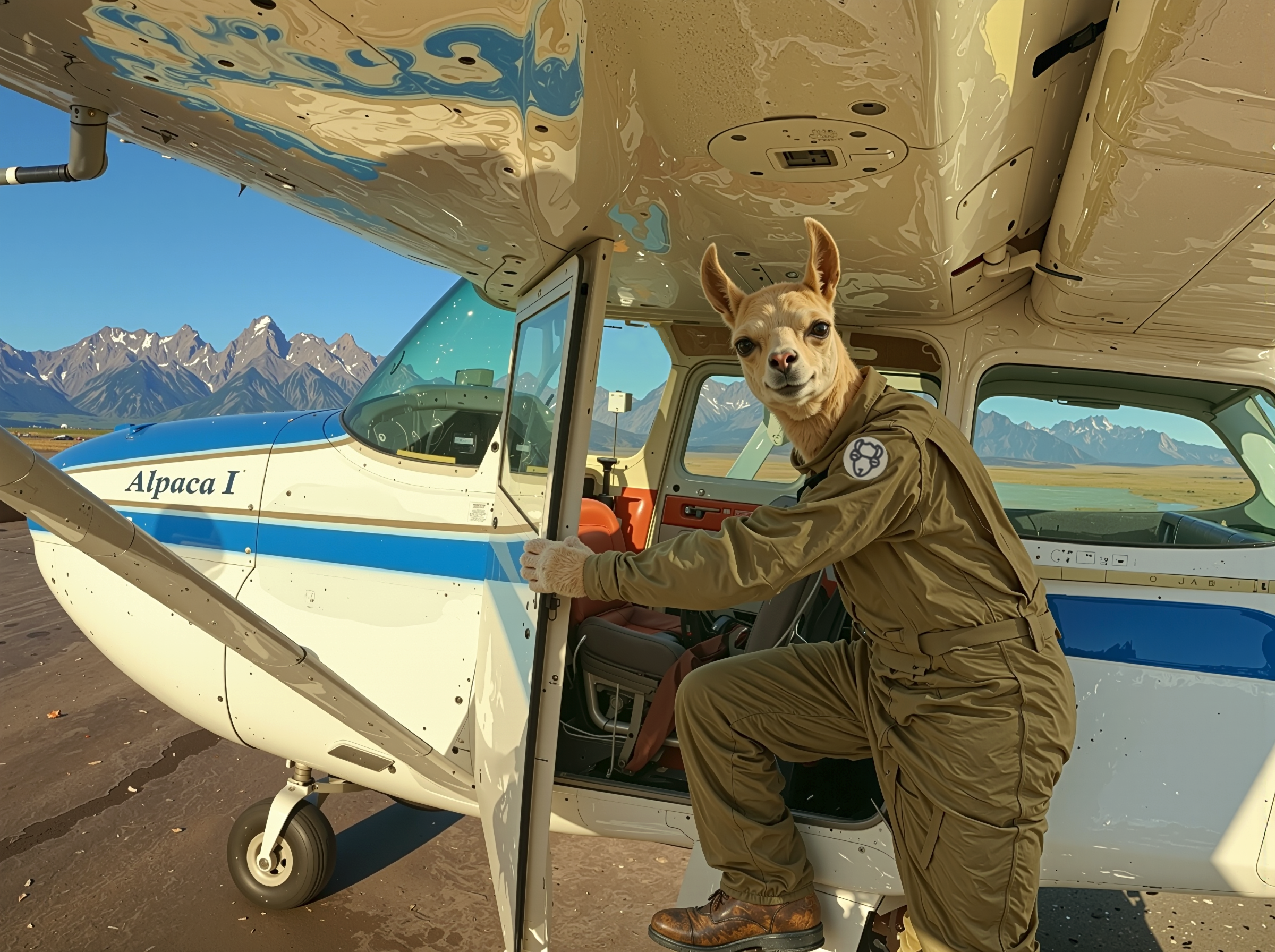
From a mountain bike to a single-engine plane—another lesson in balance, precision, and staying present.
Getting his pilot’s license was a logical first step, not a destination. It was simply the next expression of habits Dalai had already learned—showing up, paying attention, and committing fully to what was in front of him. In the cockpit, as on the bike, progress didn’t come from imagining where he would end up, but from meeting each moment cleanly as it arrived. One checklist. One adjustment. One decision at a time.
Military flight training sharpened that same mindset under heavier stakes. Procedures left no room for improvisation when lives depended on precision. Dalai met those demands the only way he knew how—by narrowing his focus to the present task and executing it cleanly. He didn’t fly to impress or to arrive somewhere else. He flew to get the next moment right. Even then, space was not the goal.
-
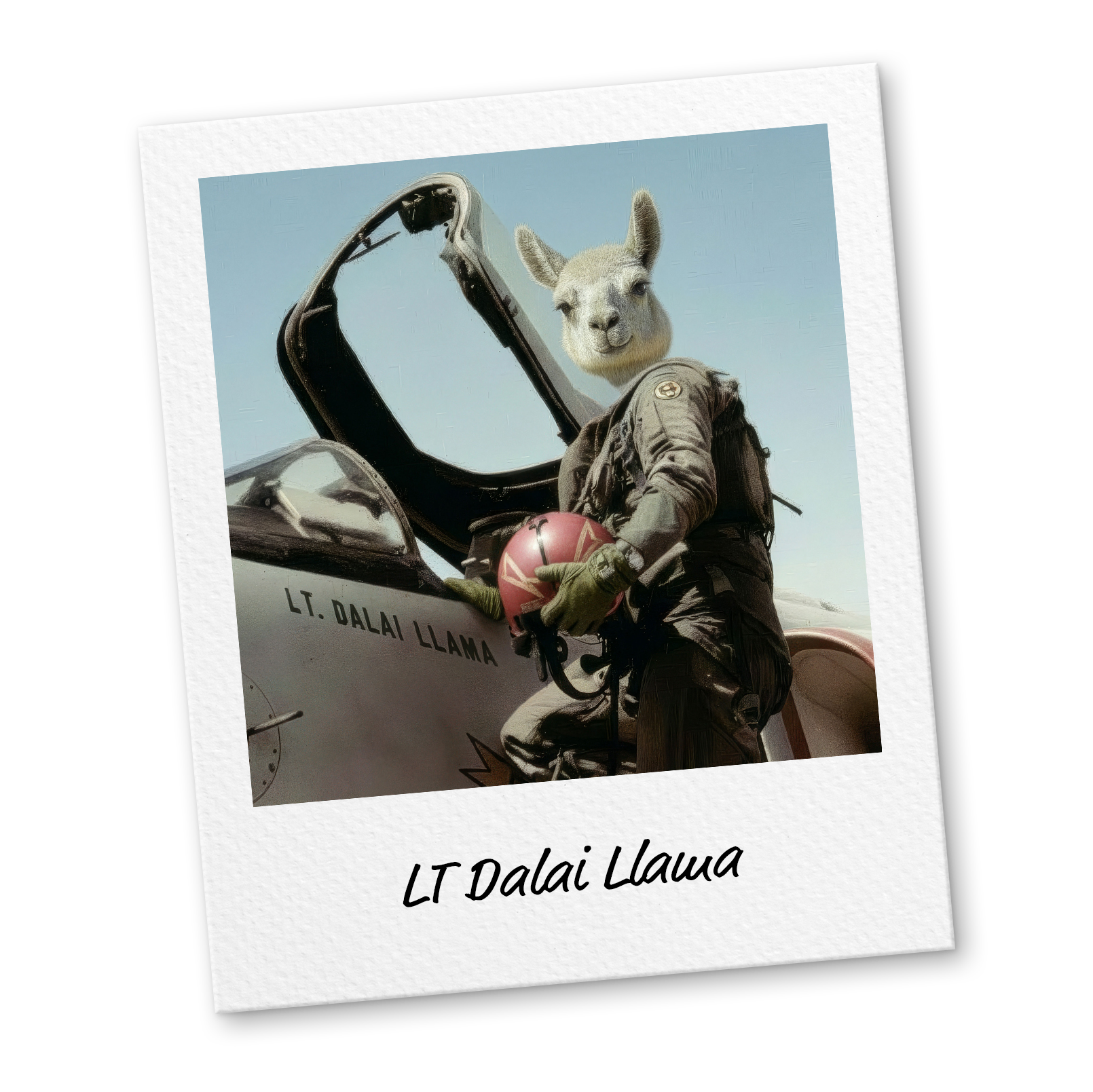
Lt. Dalai Llama. Different machine. Same discipline.
The application to the Andean Space Association (ASA) came almost as a dare, prompted by a mentor who recognized something in Dalai that he himself had not yet named. What followed was exhaustive. Medical screenings. Psychological evaluations. Interviews that tested not just skill, but character. Each phase added weight, and Dalai learned to carry it the same way he always had—by taking on only what was required, one pedal stroke at a time.
By then, he understood that gravity was never just something to escape. His readiness had been shaped under its constant pull—by habits formed under resistance—but also by the mass of those who had come before him.
-
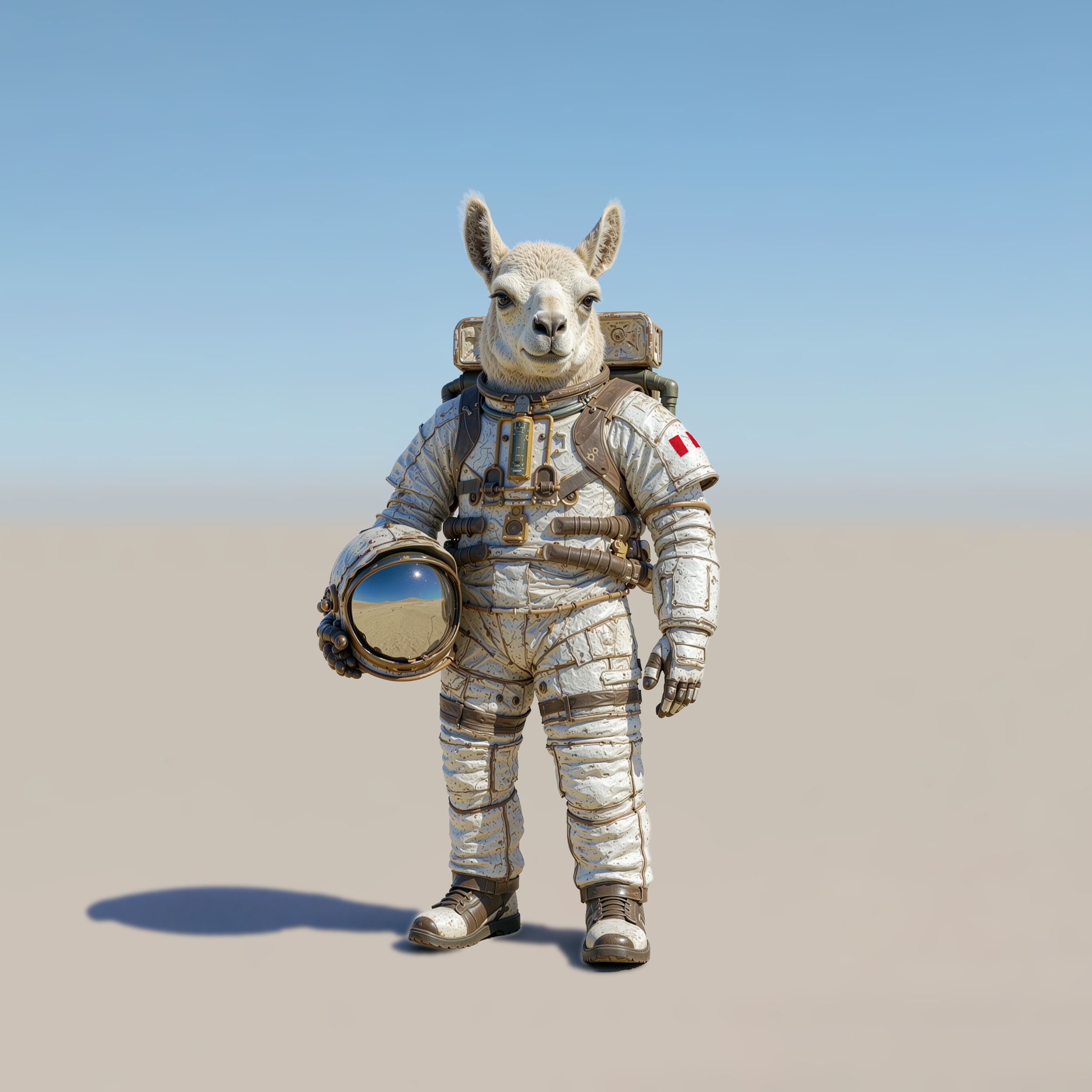
The first official portrait of Dalai; helmet off.
-
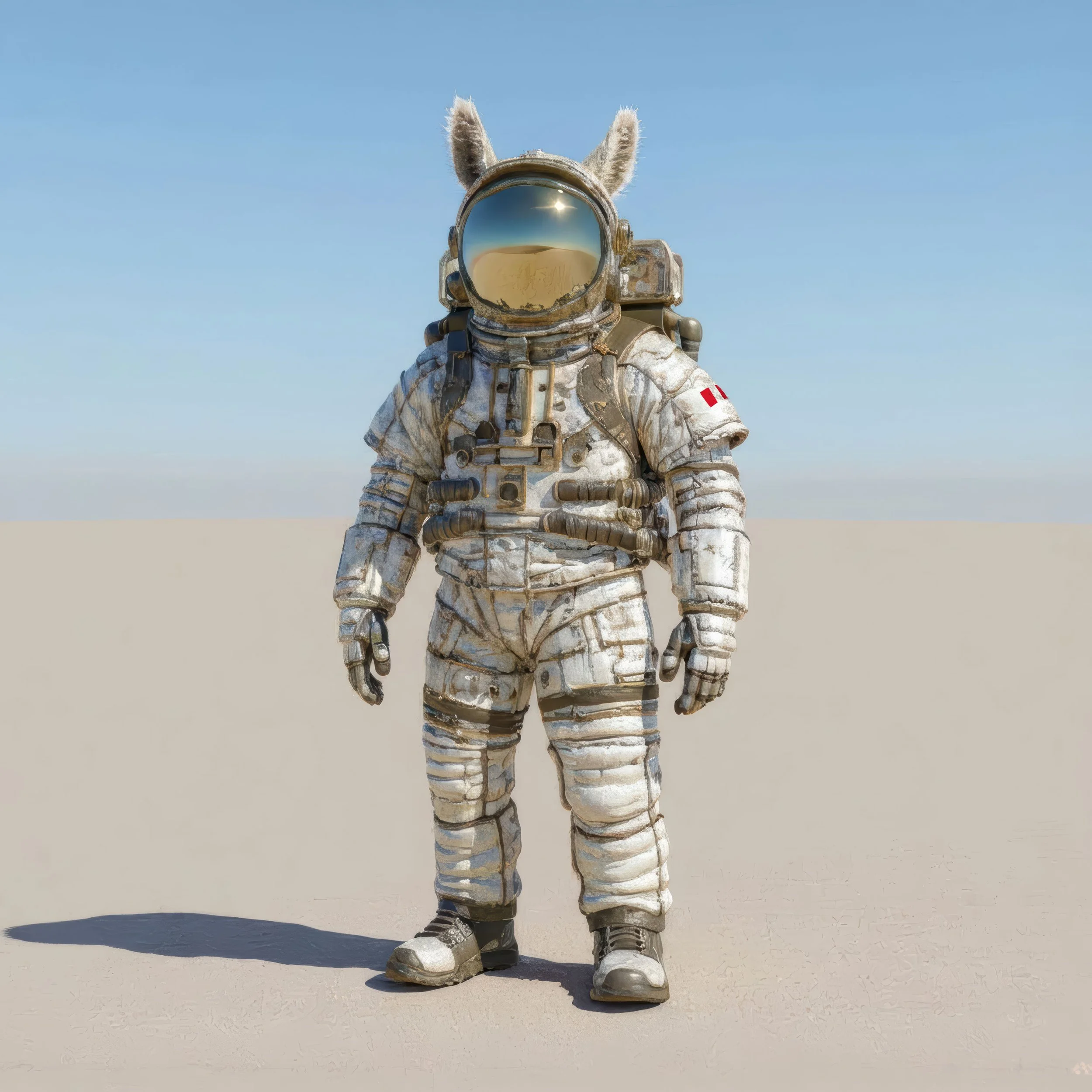
The first official portrait of Dalai; helmet on.
Dalai didn’t confuse that inherited weight with destiny. Gravity doesn’t disappear—you learn how to work within it until the moment comes to move beyond it, when you find clarity in the ride.
When Dalai was selected for the Mars mission, he didn’t celebrate loudly. He went for a ride. He sought clarity, presence, and the familiar reassurance of doing what was in front of him.
The training that followed was everything people imagine and more: centrifuges that amplified gravity, underwater simulations that replaced lift with resistance, and survival training in hostile environments that felt strangely familiar to anyone raised in the Andes. Gravity—whether increased, resisted, or briefly absent—reinforced lessons he had learned long ago on narrow trails and long climbs: traction over speed, balance over force, and the ability to stay composed when things stop going according to plan.
-
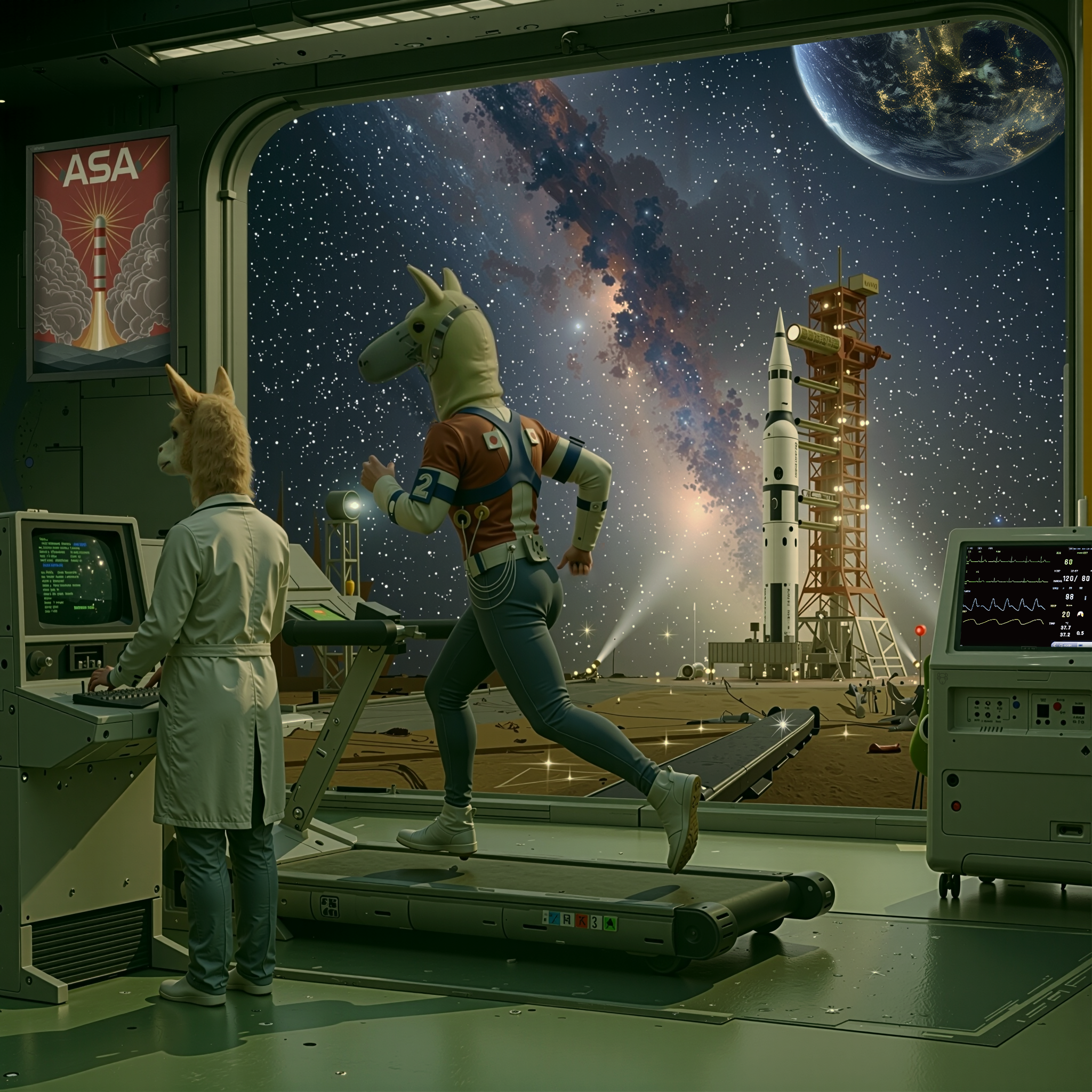
Preparation under pressure. Gravity doesn’t disappear—you learn how to work within it.
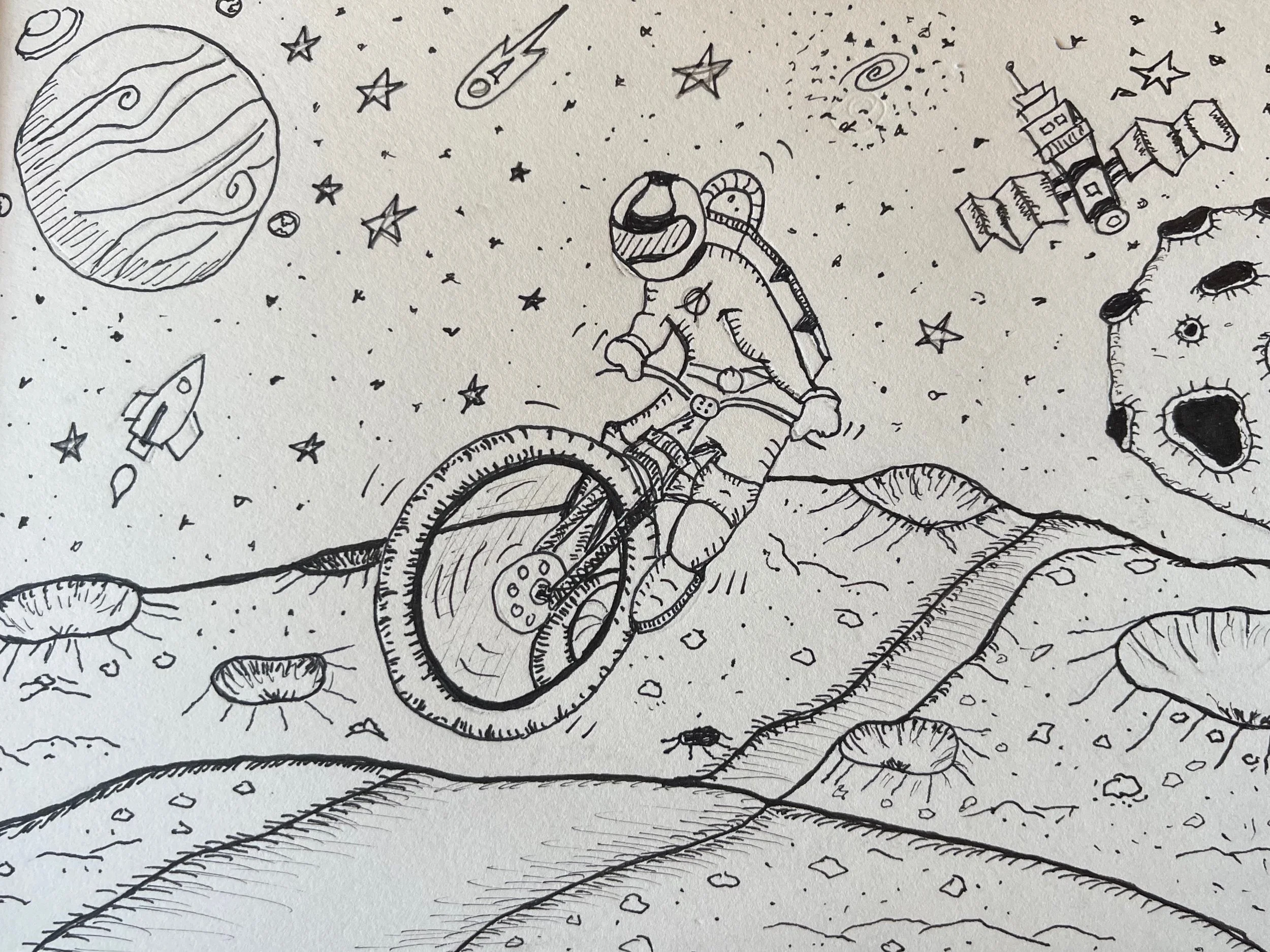
When the opportunity arose to test mobility systems on a planetary surface, Dalai proposed something unconventional: a bike. For exploration. For efficiency. For joy.
The image of a Llama[naut] riding across alien terrain wasn’t meant to be whimsical. It’s meant as a reminder that even at the edge of the known universe, we bring ourselves—and what we love—with us.
-

Even at the edge of the known universe, you bring what you love with you.
Dalai’s story isn’t about being first for the sake of being first. It’s about continuity. It’s about honoring those who proved—again and again—that brilliance and courage aren’t limited by gender, race, nationality, or origin. That roles are earned, not handed out. That training matters. Preparation matters. And that when opportunity is grounded in those fundamentals, it has a way of becoming blind to everything else—even making room for a qualified llama.
++
What matters most to me is that this story reads as what it is: an homage. Not just to astronauts, but to people in every field who widened the path through persistence, preparation, and the willingness to keep showing up when it would have been easier not to.
Space exploration has always been a mirror of who we believe belongs in the future. Dalai belongs there because so many others insisted, through action, that the door be opened wider.
From a dusty trail in the Andes to the quiet hum of orbit—and eventually to an inhospitable alien landscape—the same rules apply: look ahead, trust your training, help others up when they fall, and never forget where you learned to ride.
Moments like the original Apollo landings had a rare way of pulling us briefly out of ourselves. Perhaps Artemis II can offer something similar—not as a cure for division, but as a reminder that shared horizons still exist.
Together, we all belong.
Before I developed Dalai into the character above and before putting him on a t-shirt. Before the training and missions, there were just two drawings in my sketchbook.
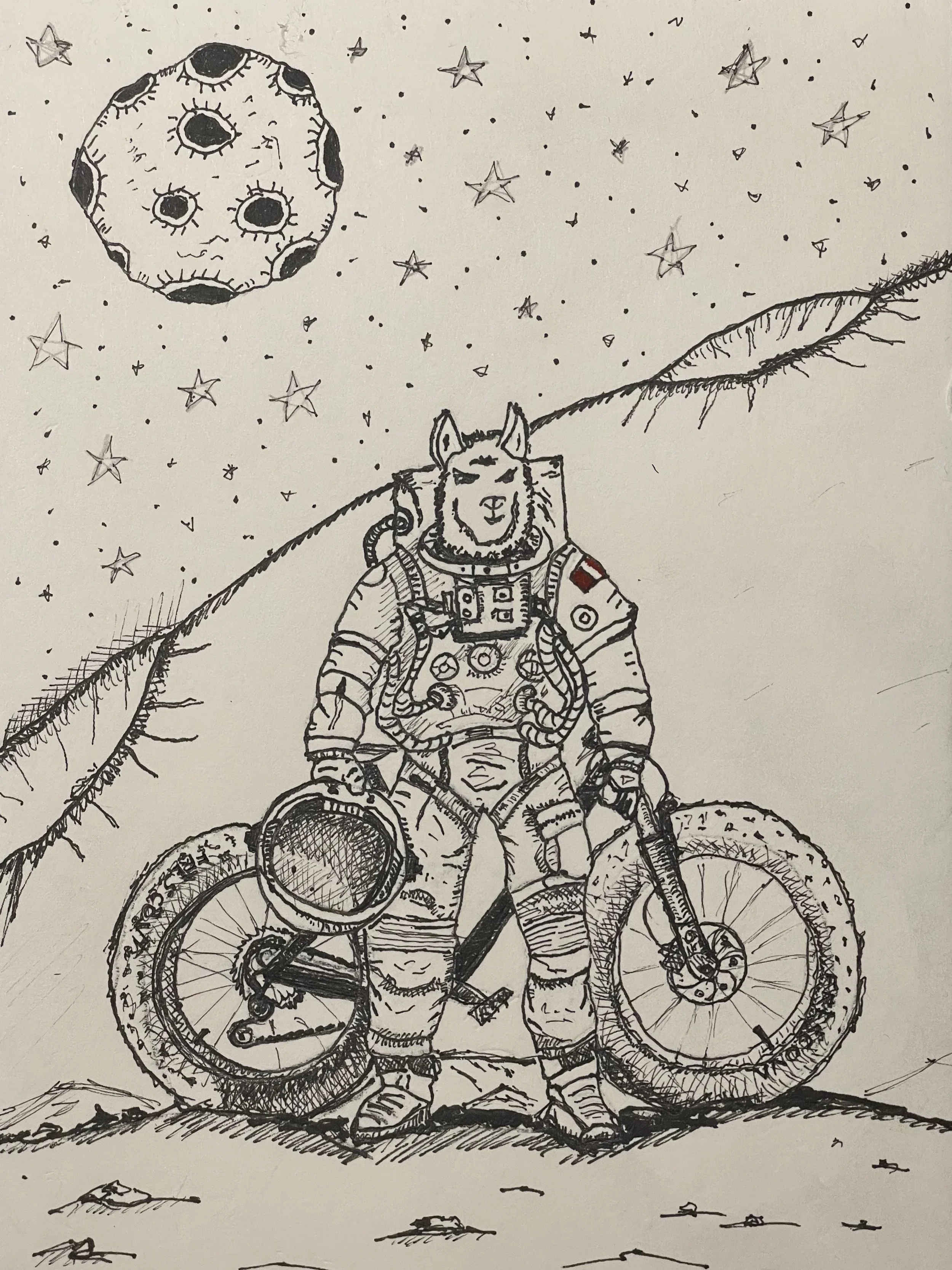
Footnote:
Dalai the Llamanaut is a fictional character (yes, really). His story intentionally draws from my experiences and the experiences and milestones of those who expanded the boundaries of representation and possibility in human spaceflight. Elements of Dalai’s journey are inspired by people who overcame significant barriers, including Guion Bluford Jr., Valentina Tereshkova, Sally Ride, Rakesh Sharma, Christina Koch, and others around the world.
Dalai exists to honor their achievements—and to imagine a future where exploration reflects the full diversity of humanity, even if that future might include a llama in the cockpit.
Endnotes: Real Histories Woven Into Dalai’s Story
As I sat down to write this, I spent time reading and revisiting the stories of people whose paths felt aligned with Dalai’s—figures whose careers reflected the values I wanted this character to carry forward. There’s also a small piece of me in Dalai, not in the achievements or the milestones, but in the habits: finding “long cuts,” showing up daily, and learning that progress often comes from choosing steadiness over speed.
The individuals below come from different countries, cultures, and eras, but they share something essential: none of their achievements were symbolic or handed out. Each earned their place through preparation, discipline, and sustained excellence—expanding not just who could fly, but who could imagine themselves doing so.
Guion Bluford Jr. Dalai’s quiet excellence, technical mastery, and awareness of representation draw inspiration from Bluford’s career and his insistence that astronauts be defined by competence, not spectacle. Bluford became the first African American to travel in space in 1983, flying aboard Space Shuttle Challenger on STS-8, and went on to complete three additional shuttle missions.
Valentina Tereshkova Dalai’s early understanding that progress comes from discipline and respect for powerful systems reflects Tereshkova’s historic flight as the first woman in space. In 1963, she orbited Earth 48 times aboard Vostok 6, demonstrating endurance and precision at a moment when both were still being tested.
Sally Ride The understated professionalism in Dalai’s military and astronaut career mirrors Ride’s insistence that astronauts be defined by their work rather than novelty. Ride became the first American woman in space in 1983, flying aboard Challenger on STS-7, and later played a key role in shaping science education and astronaut selection.
Rakesh Sharma Dalai’s place in an international space program and his story’s rejection of a single-nation narrative are inspired by Sharma’s flight as India’s first astronaut. In 1984, Sharma traveled aboard Soyuz T-11 as part of the Interkosmos program, symbolizing global participation in human spaceflight beyond Cold War boundaries.
The Artemis II Crew Dalai’s fictional journey unfolds alongside a very real one. The return to the moon with the Artemis II crew — Reid Wiseman (Commander), Victor Glover (Pilot), Christina Koch (Mission Specialist), and Jeremy Hansen (Mission Specialist, Canadian Space Agency). Each member represents the next chapter of human lunar exploration.
Each earned their place through decades of military service, engineering, flight operations, long-duration spaceflight, and mission leadership. The Artemis II crew reflects continuity, discipline, and global cooperation in space — as symbolism, but as the result of sustained excellence.
This list is far from definitive. It represents just a handful of the many individuals who have followed similar paths—often quietly—earning their place through discipline, persistence, and a willingness to keep moving forward when no one was watching.