
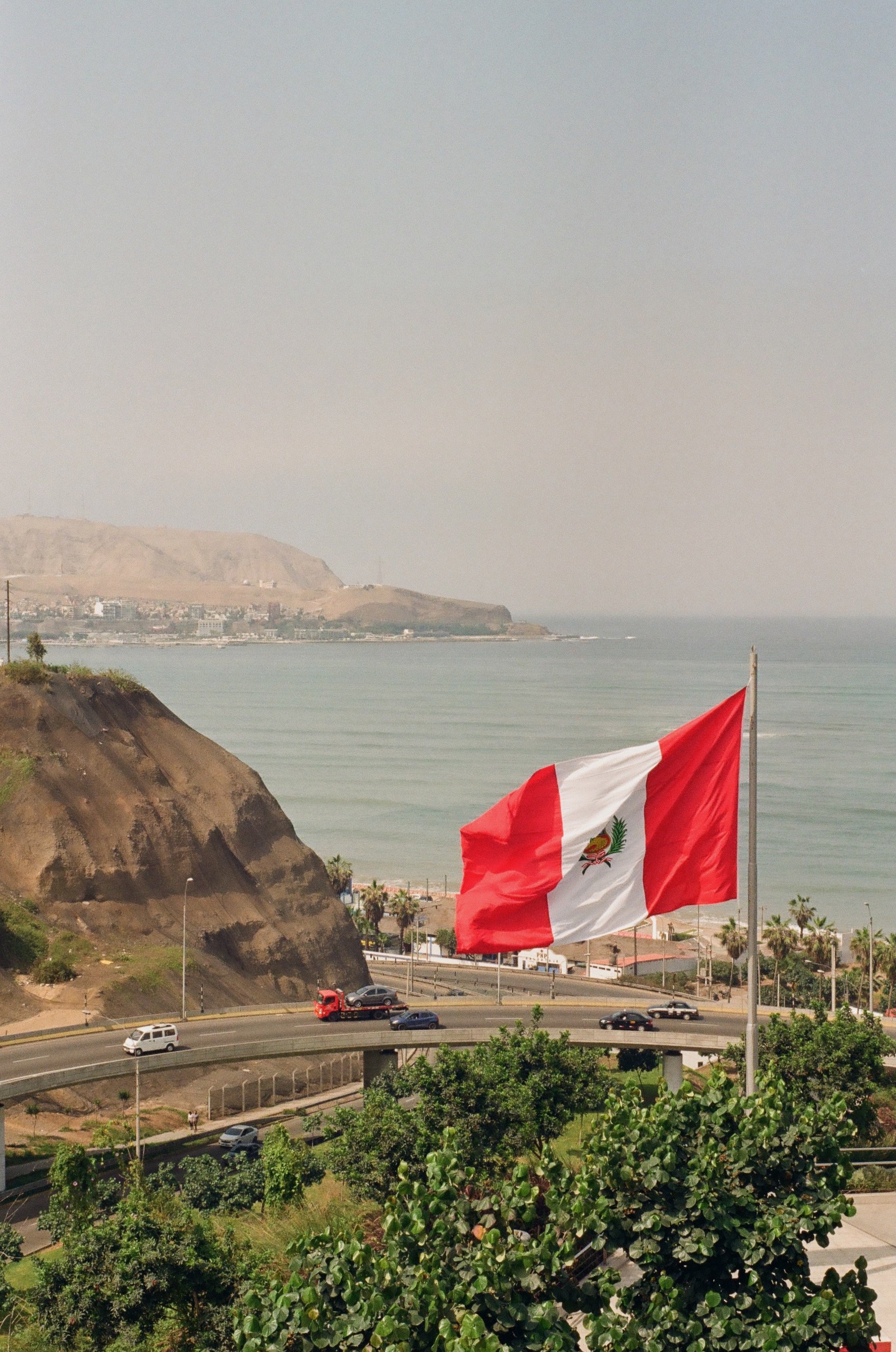
Miraflores, in Film
Three years ago, just before the pandemic, I had the opportunity to travel to Northern Italy and brought along my father’s refurbished Kodak Retina IIIc film camera. Shooting with film again was a joy. The anticipation of waiting for developed negatives—something long absent from my workflow—made the process feel deliberate and rewarding.
I’ve used the camera a few times since then, but nothing felt quite right to share—until now.
In late September 2023, I brought the Retina with me on a trip home to Lima and spent several days walking the streets of Miraflores. Photographing the district on film gave me a renewed appreciation for the details that make this part of the city so special.
September 2023, images/text: Martin Fernandez
Several years ago, my brother Miki gave me our father’s old Retina IIIc. My dad, an Air Force officer, traveled frequently, and during a trip to Germany in the late 1950s he purchased the camera. I have little memory of him using it—I was born in the mid-1960s, and by then the camera had been tucked away in a drawer.
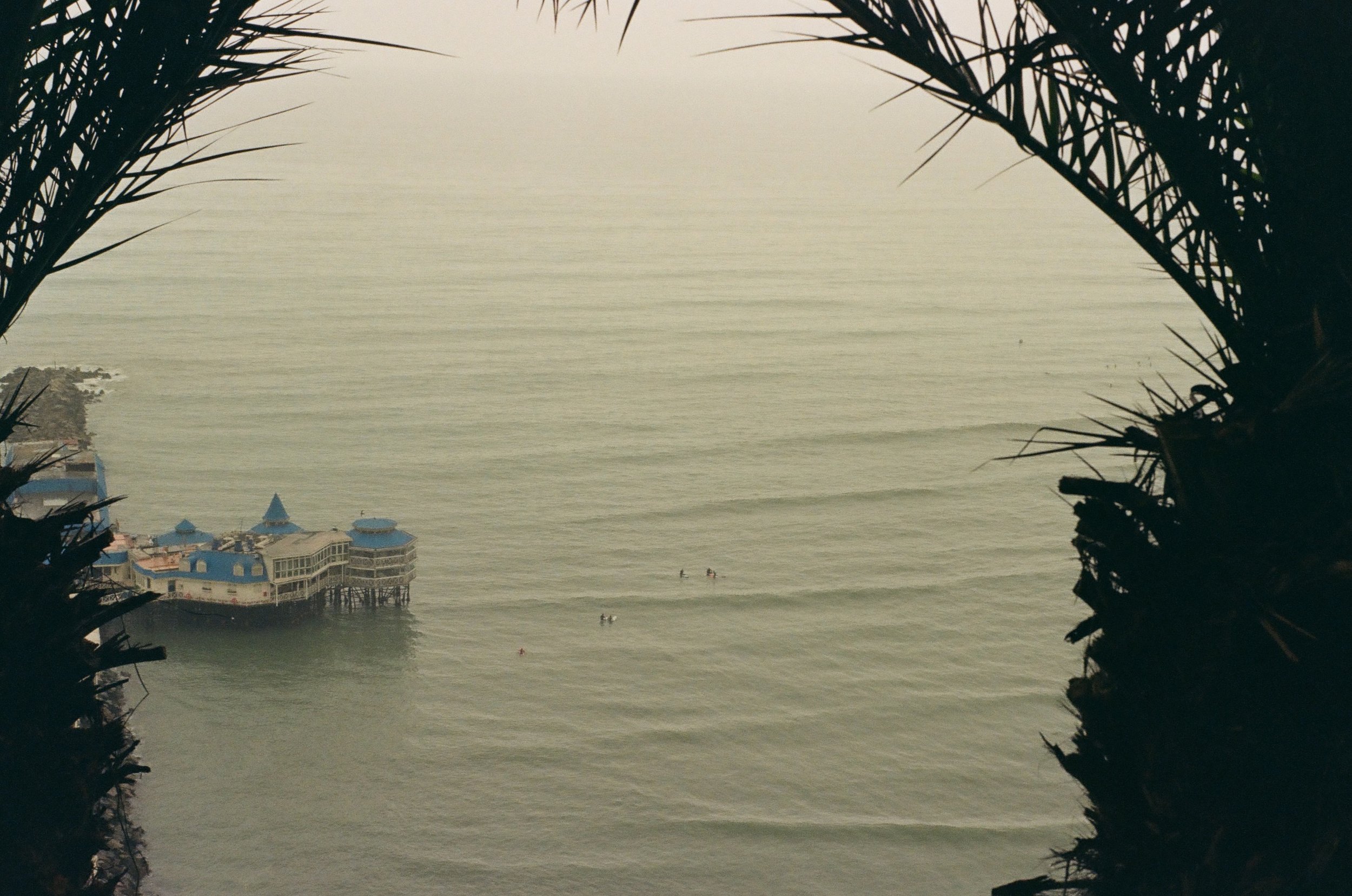
ABOVE: The view from “Sunset Park” of La Rosa Nautica Restaurant. Makaha is a popular beginner surfing spot. Surfers can be seen on the water year round.
By the time it came into my hands, it was no longer functional. I put it aside for a few years until late 2019, just before a trip to Italy, when I decided it deserved a second life. Finding someone to service a vintage camera proved harder than expected, but after plenty of searching I connected with Chris Sherlock in New Zealand and shipped it off for a full refurbishment.

ABOVE: Sipping coffee at my hotel before heading out for one of my regular morning walks. The Kodak Retina IIIc reflected in my iPhone’s screen. I shot hundreds of images on my phone, you can see some of them from my trip to El Mercado.
Shortly after its return, I took the camera with me to Turin, beginning my return to film photography. Those images were likely the first produced by the camera in more than four decades. The photographs on this page represent the second body of work captured with it.
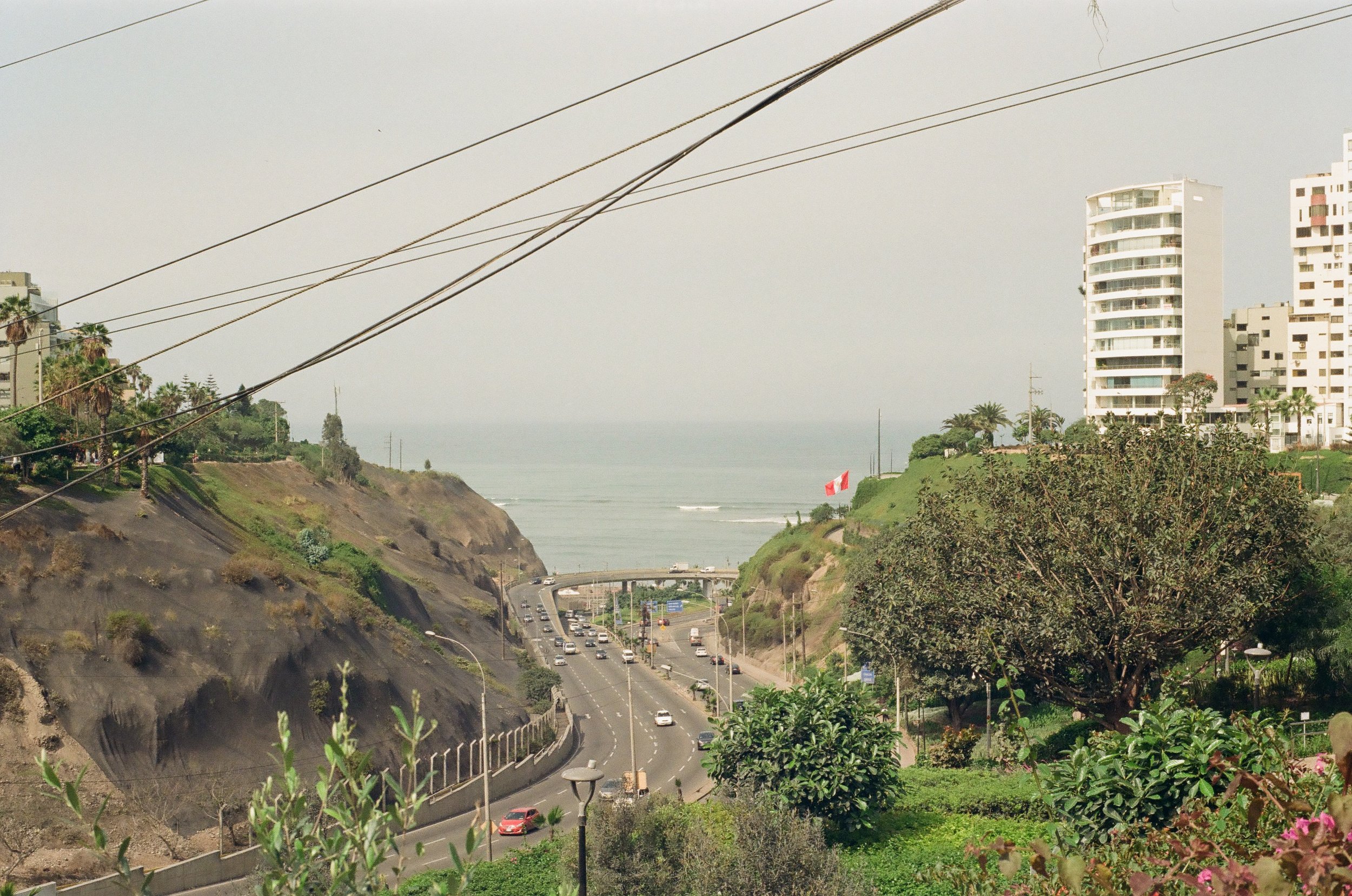
ABOVE: A view of la Quebrada Armendariz from El Malecon de la Reserva. The Peruvian flag in the background is perched along the new Bicentennial Park, which is carved along the ravine. The park allows people to walk down to the coast along gentle sloped and beautifully landscaped paths.


ABOVE: The view of la Costa Verde from one of the Bicentenial Park landings, one third of the way down the ravine.
I travel to Lima nearly every year and spend most of my time in Miraflores, where my elderly parents still live. These trips give me the chance to be with them, but also to revisit the neighborhoods and streets where I grew up. Photographing Miraflores on film slowed the experience even further—forcing me to choose carefully, compose intentionally, and wait for the moment before pressing the shutter.
Even now, looking back at these images brings me right back to those walks and the emotions I felt while making them.
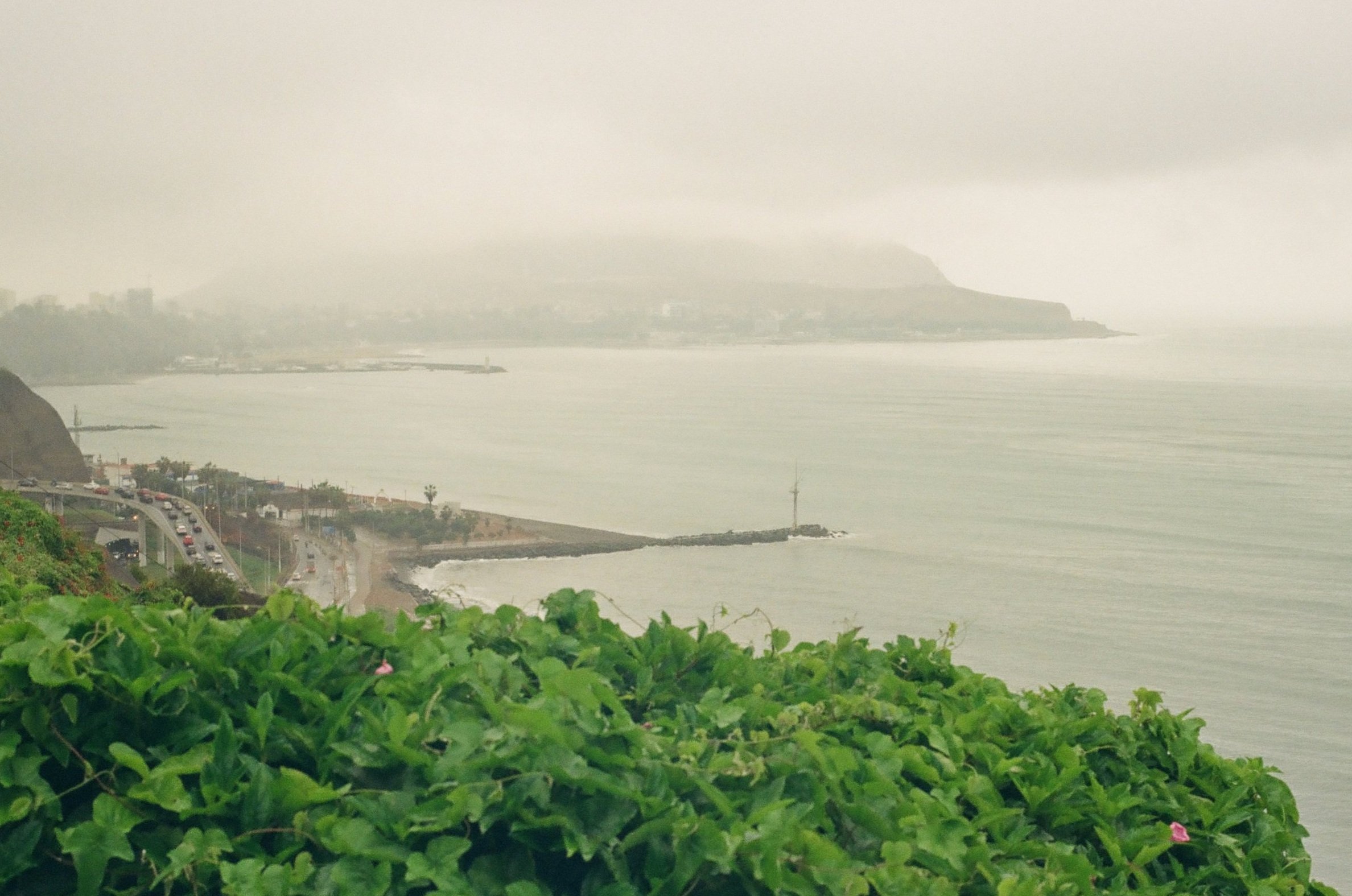
ABOVE: Lima the Grey. Lima, and its surrounding districts are often covered in a shroud of fog.
Lima and its surrounding districts are often shrouded in fog between June and October, a persistent gray veil locals know well. Herman Melville famously referred to it as “the tearless Lima,” calling it “the strangest, saddest city thou can’st see.” And yet, despite the cloud cover, it rarely rains. Sidewalks remain damp, plants thrive, and the city stays unexpectedly green.
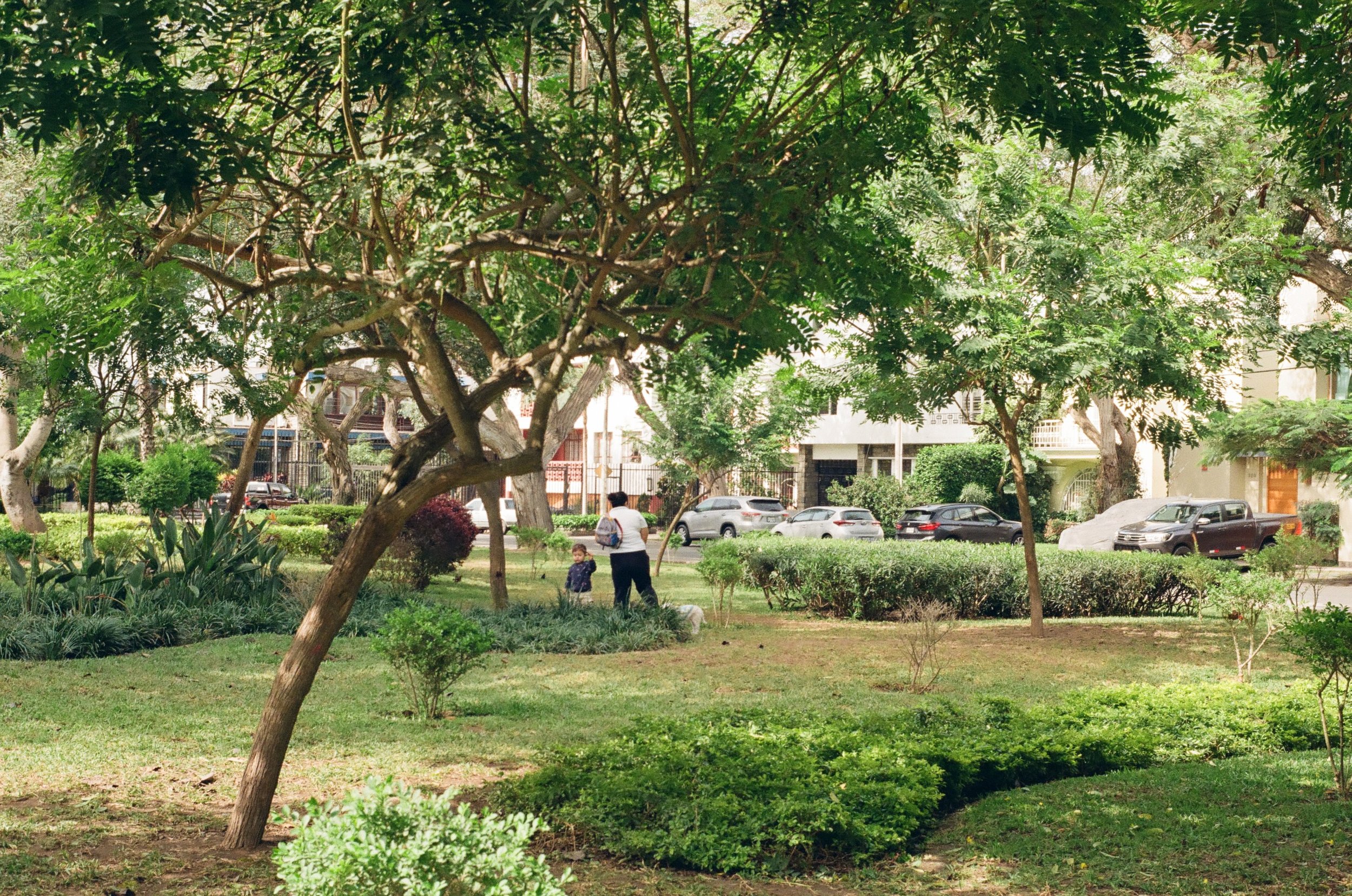
ABOVE: One of several parks in Miraflores, el Parque Melitón Porras.
Miraflores—literally “behold the flowers”—takes its name from the abundance of Bougainvillea that spill across walls and balconies. Parks and green spaces are woven throughout the district, offering moments of calm within an otherwise dense urban landscape.
-
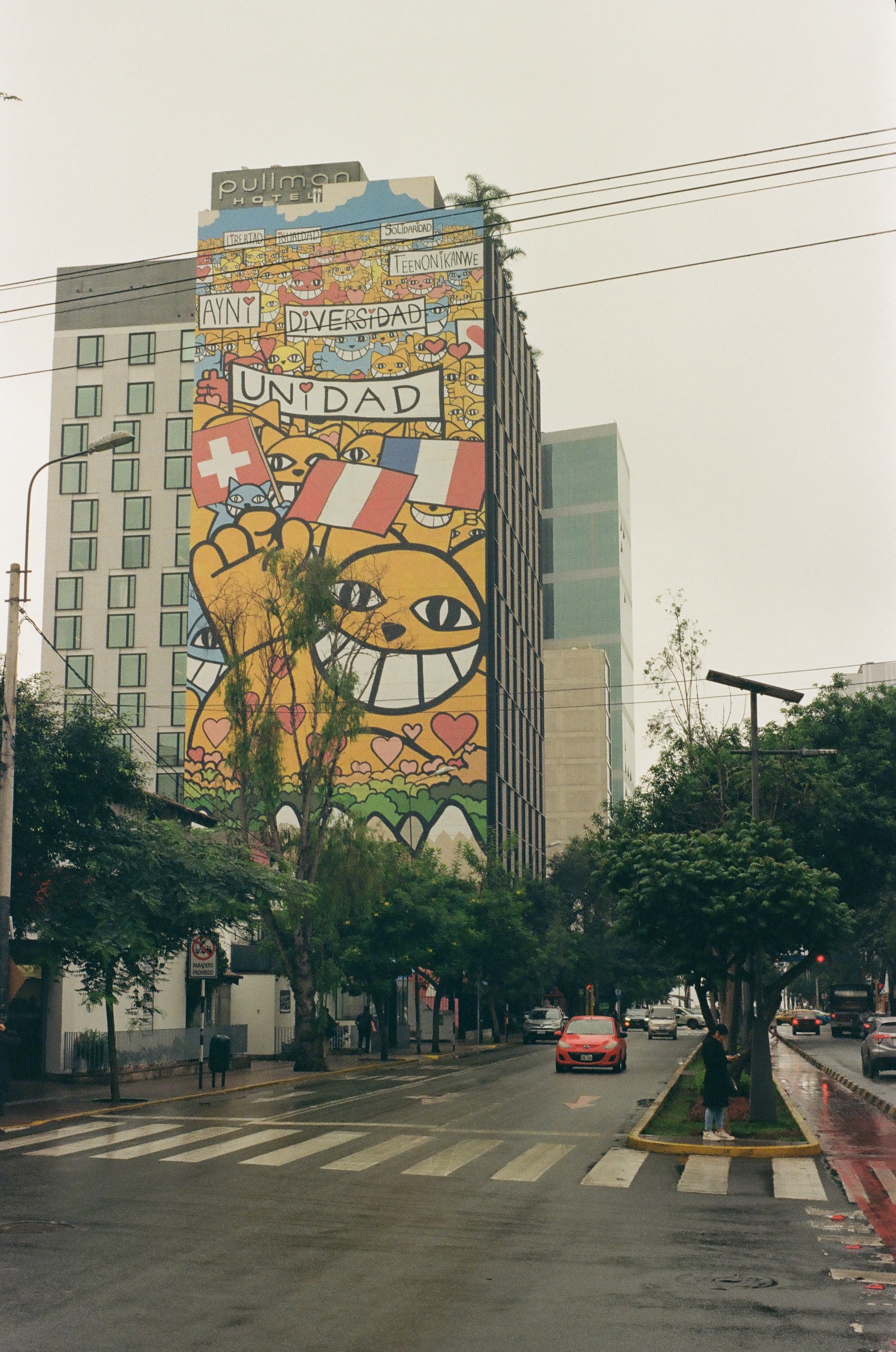
Avenida Larco during a misty morning. The otherwise drab wall of the Pullman hotel is decorated with a colorful mural.
-
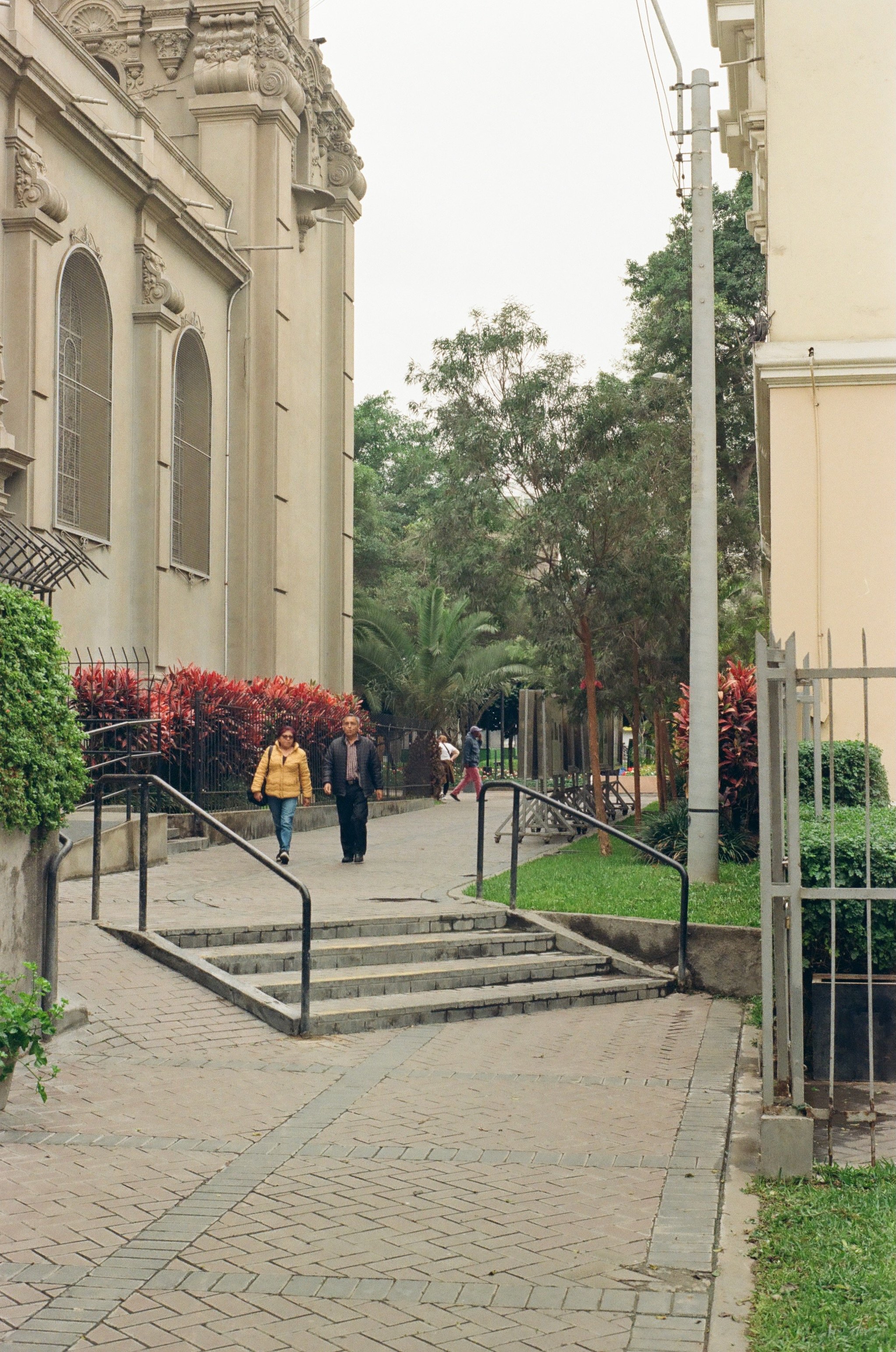
Walking between la Virgen Milagrosa and the Municipalidad de Miraflores on Pasaje Raul Torres Barrncechea.
-

The new walkways and pathways of the Bicentennial park in Miraflores offer great views of the Pacific and Barranco.
-
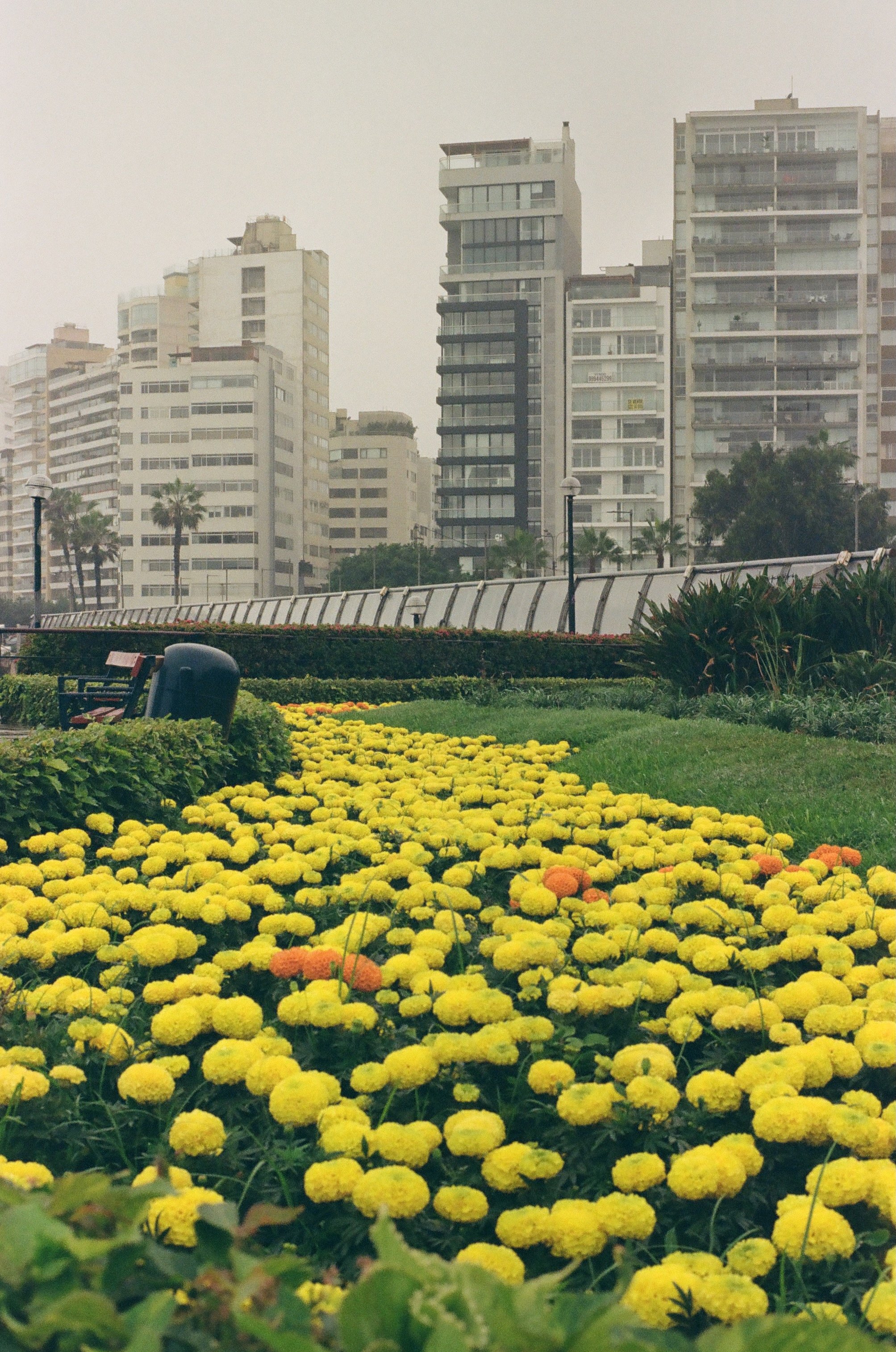
The Eduardo Villena Rey bridge as seen from the small Mariano Necochea Park along the Maleon de la Reserva.
ABOVE/BELOW: A few snapshots from my daily morning walks in Miraflores.
-

One of the wide tree covered paths of el Parque 7 de Junio in central Miraflores.
-

A building door man sweeps the sidewalk along Calle Alcanfores in Miraflores.
-

A couple makes their way along the Malecon along Parque Domodossola in Miraflores.
-

Calle Jose Gonzales in Miraflores is framed by flowering “Flame Trees,” commonly known as Royal Poincianas.
In addition to several rolls of color film, I also shot two rolls of black-and-white during this trip. Below is a selection from the roughly sixty frames that survived the development process.
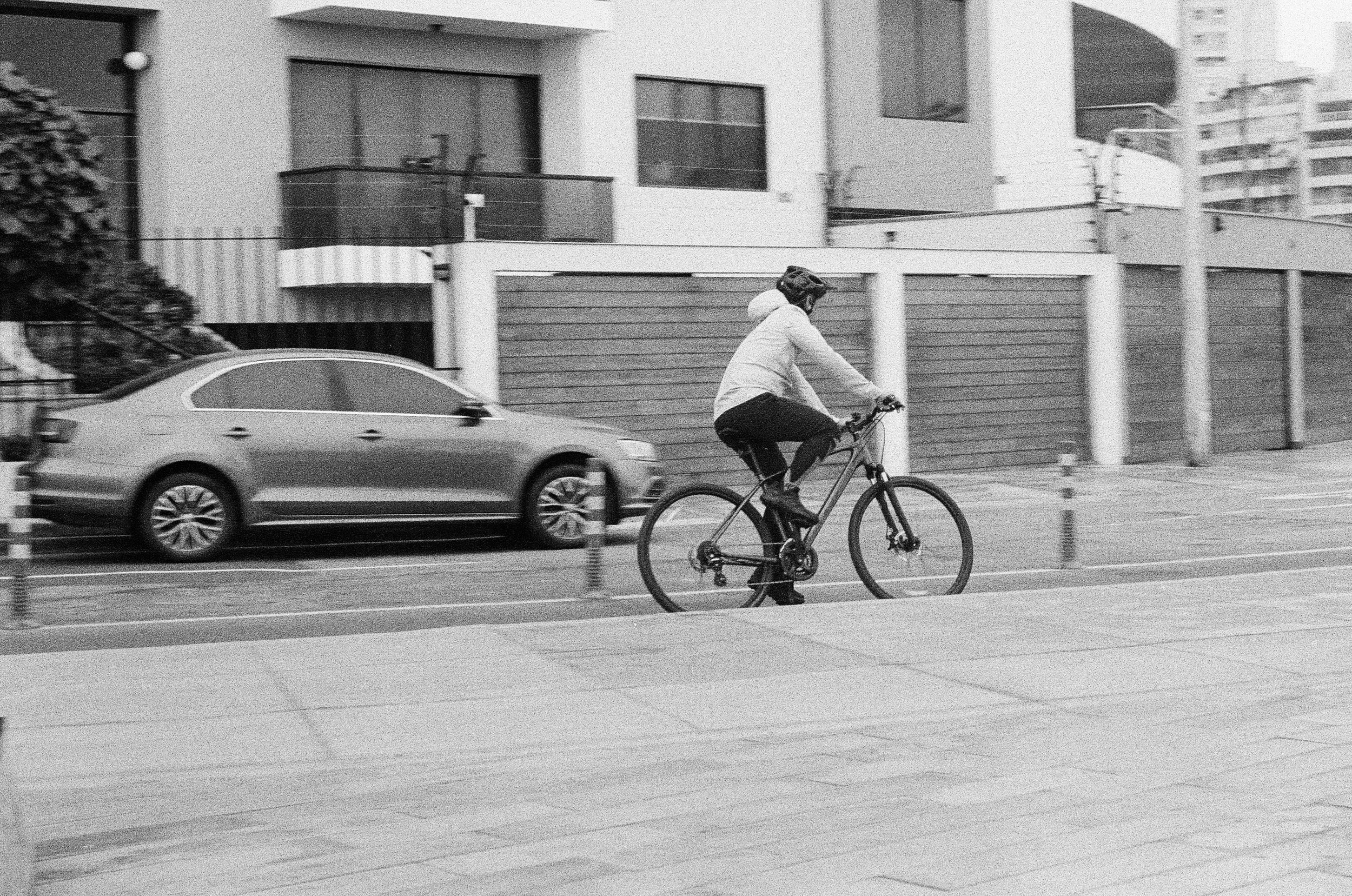
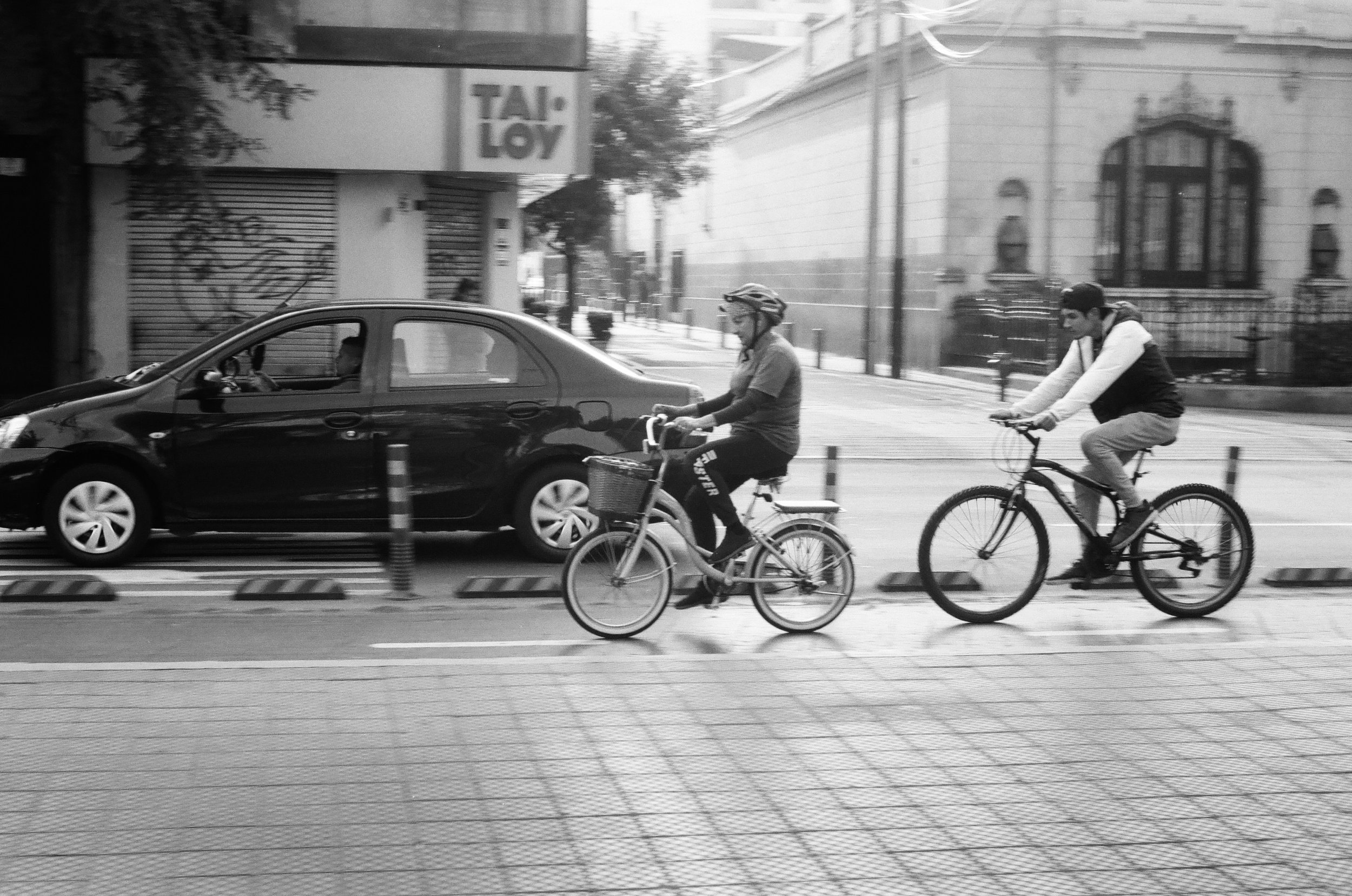

ABOVE: Keeping in the spirit of Best Rides DC, Cyclists and scooter riders along the “cilovias” of Miraflores.

A walker makes her way along the central tree lined path of Avenida Pardo in Miraflores.
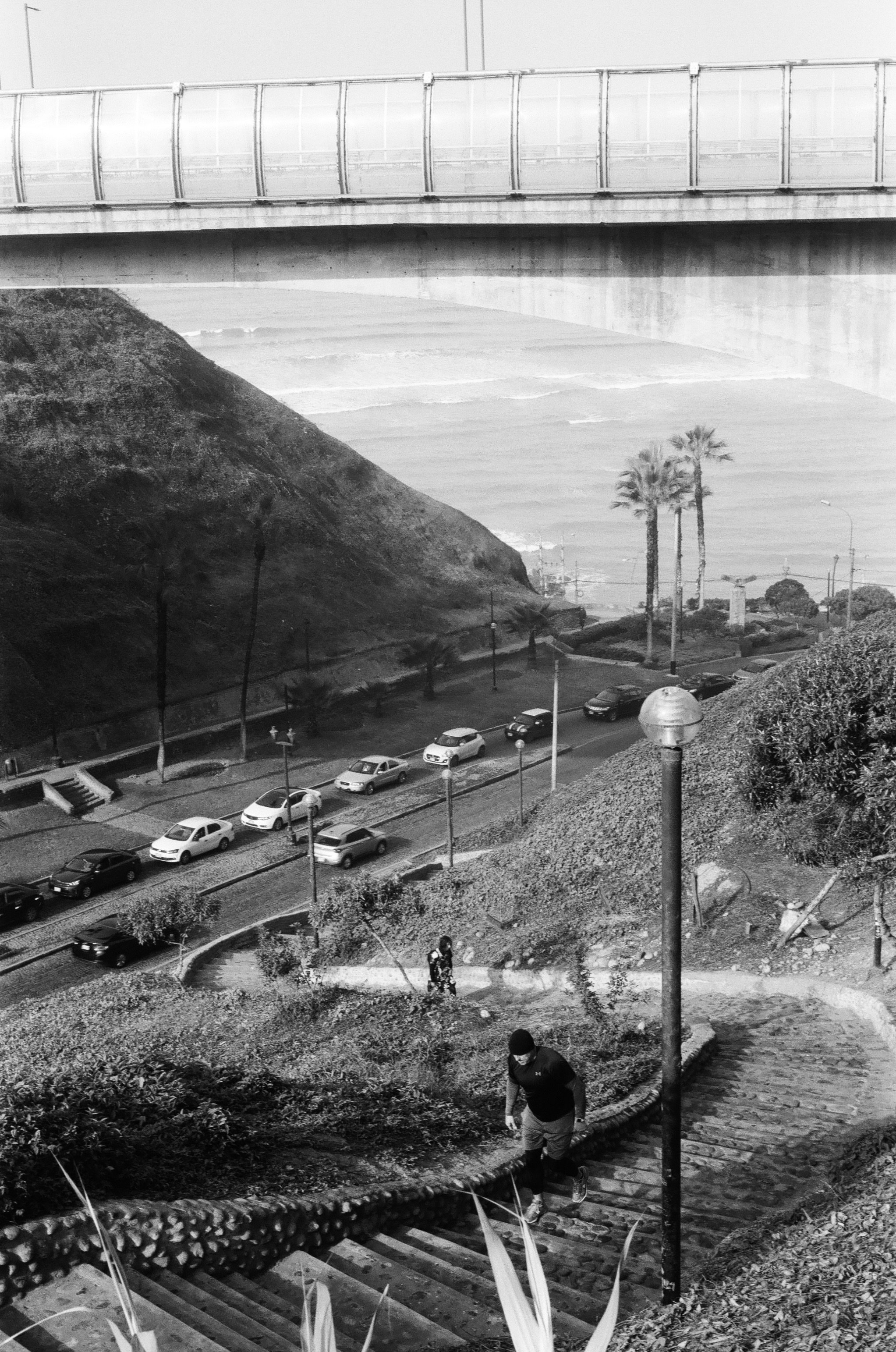
Morning traffic slowly makes its way up from la Costa Verde along la Subida/Bajada Balta. This road remains surfaced in cobbles and also provides a way down for walkers and runners to the coast below.
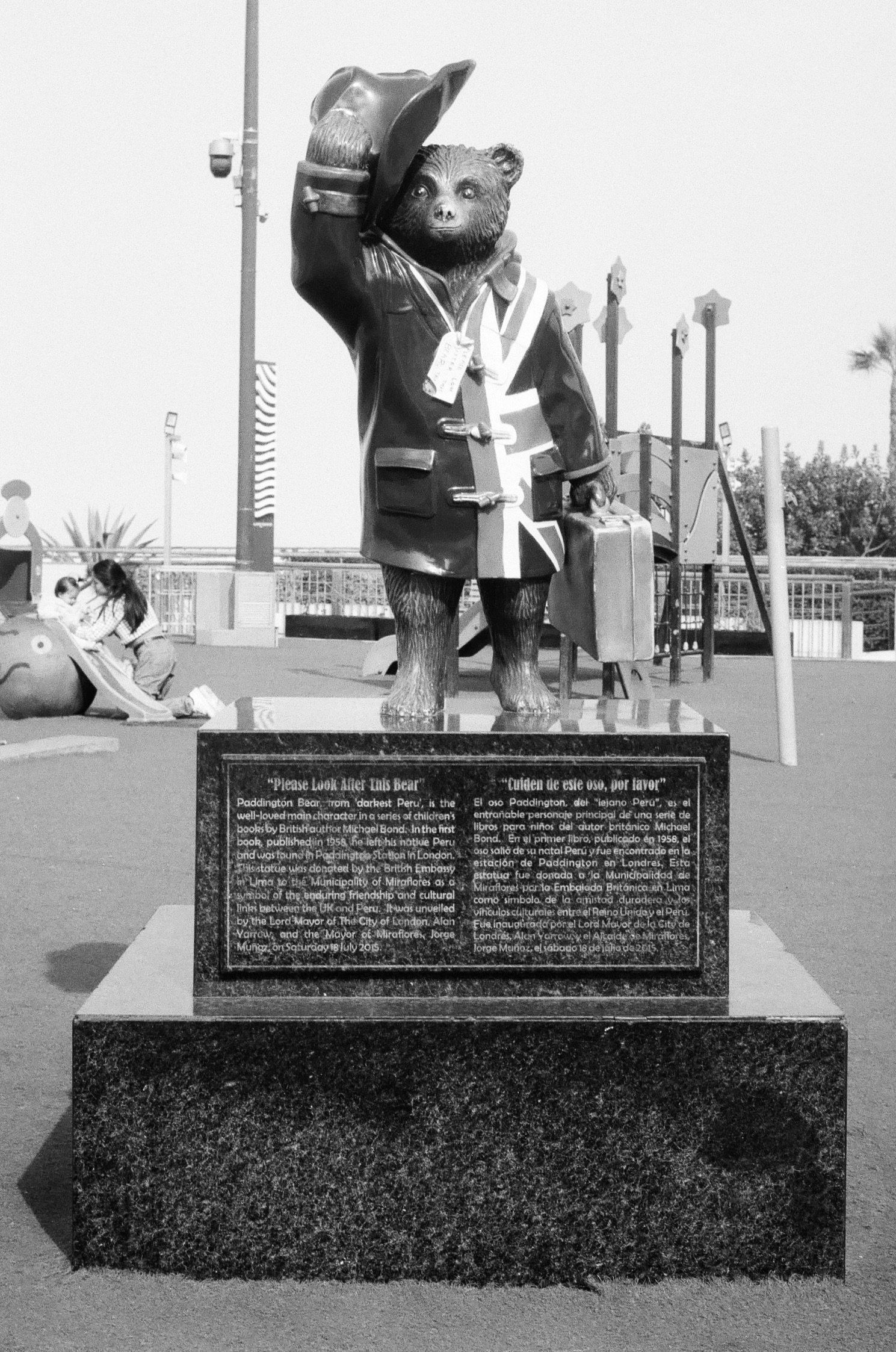
Paddington Bear from "darkest Perú". A statue honoring the beloved bear from Michael Bond's classic book on the playground above Larco Mar.
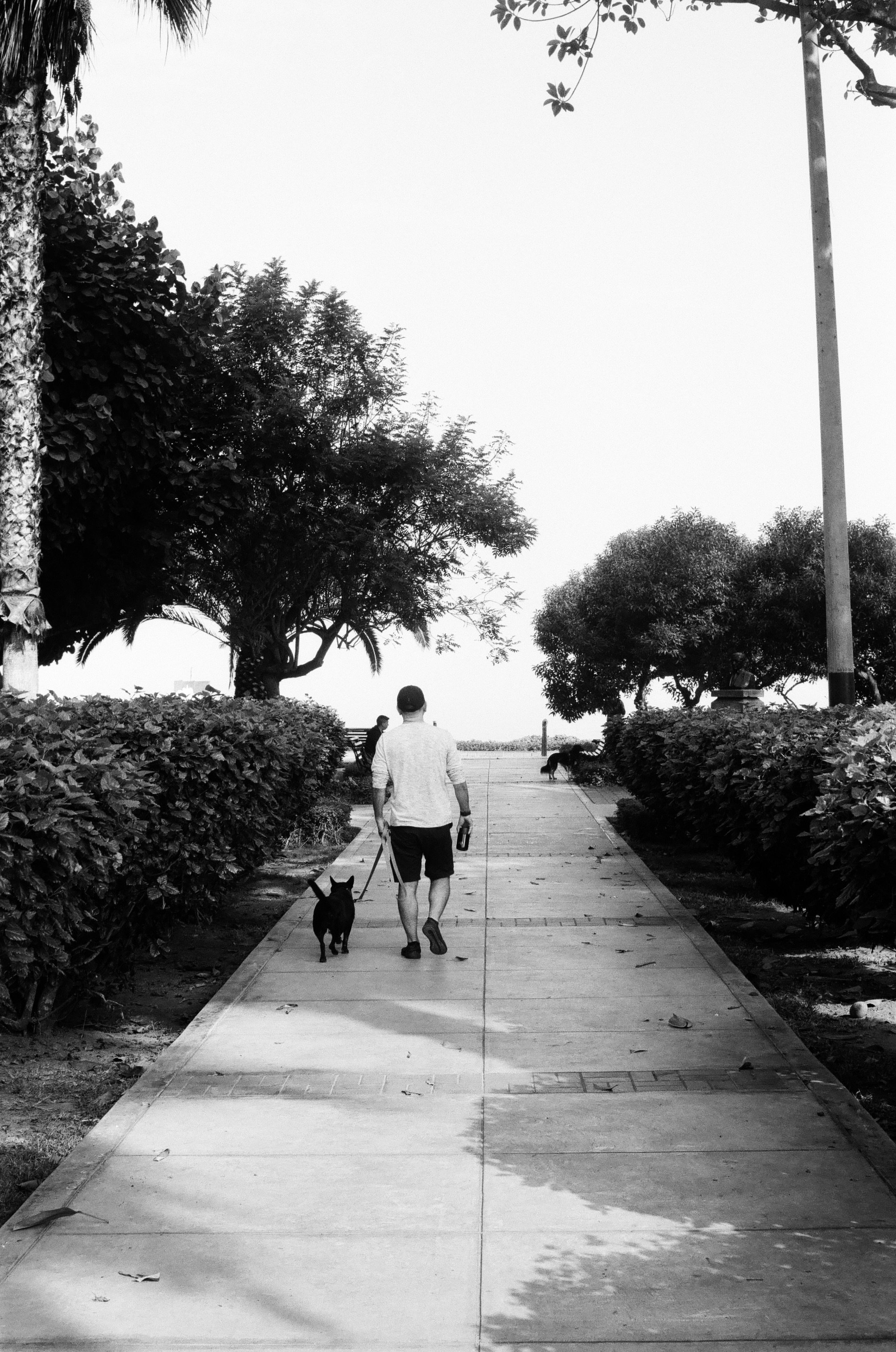
El Parque Domodossola in Miraflores, like all of the other parks that abound in Lima, is a favorite for dog walkers.
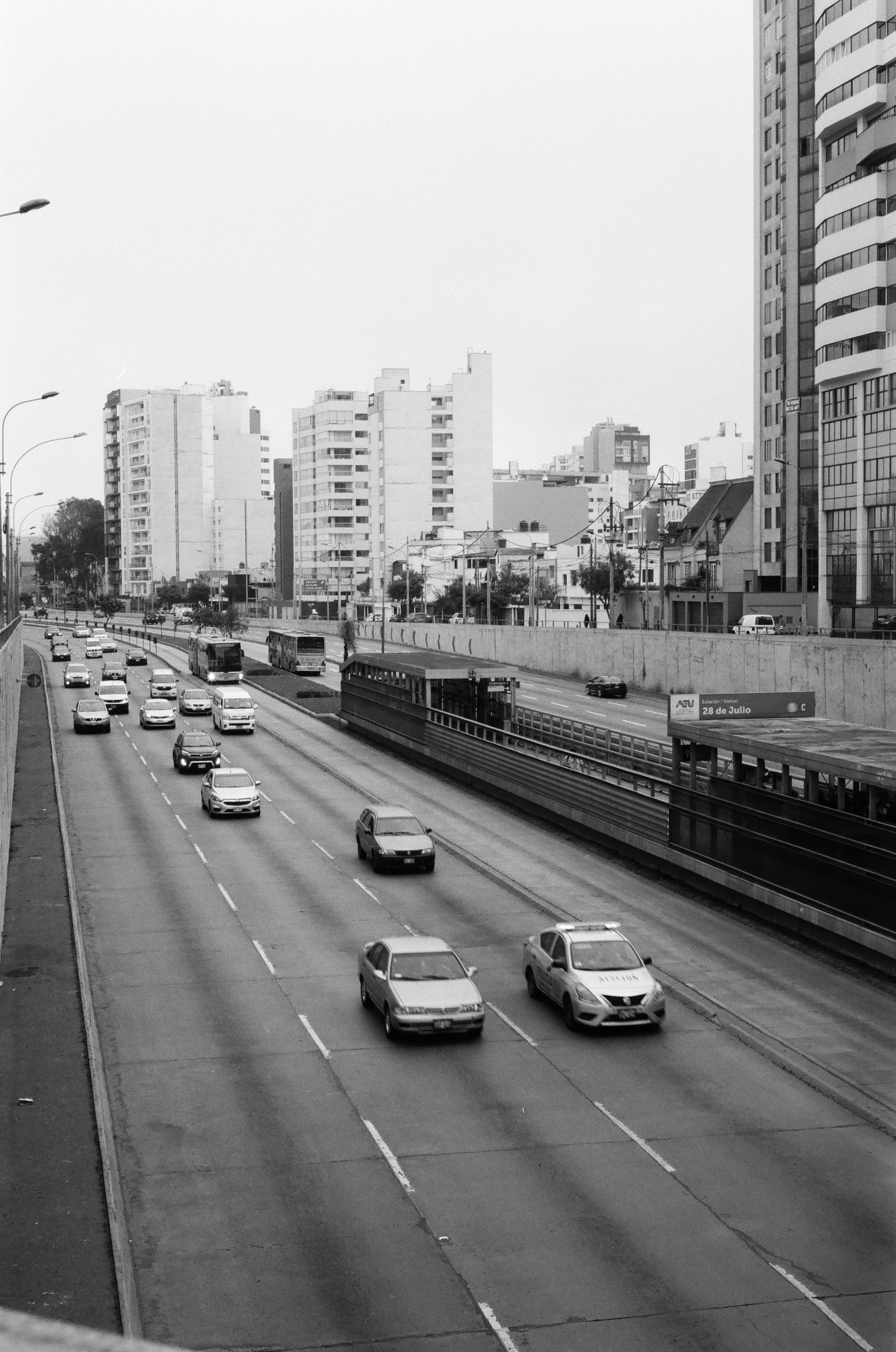
La Via Expresa, or locally known as El Sanjon. This is one of Lima's "express" arteries that ferries drivers and commuters to the center of the city.

ABOVE: La Pasteleria y Panaderia, San Antonio, has been a local landmark for decades. The establishment has survived surrounding progress and remains a local favorite for desserts, breads, empanadas, and other delicacies. San Antonio is always bustling with activity.
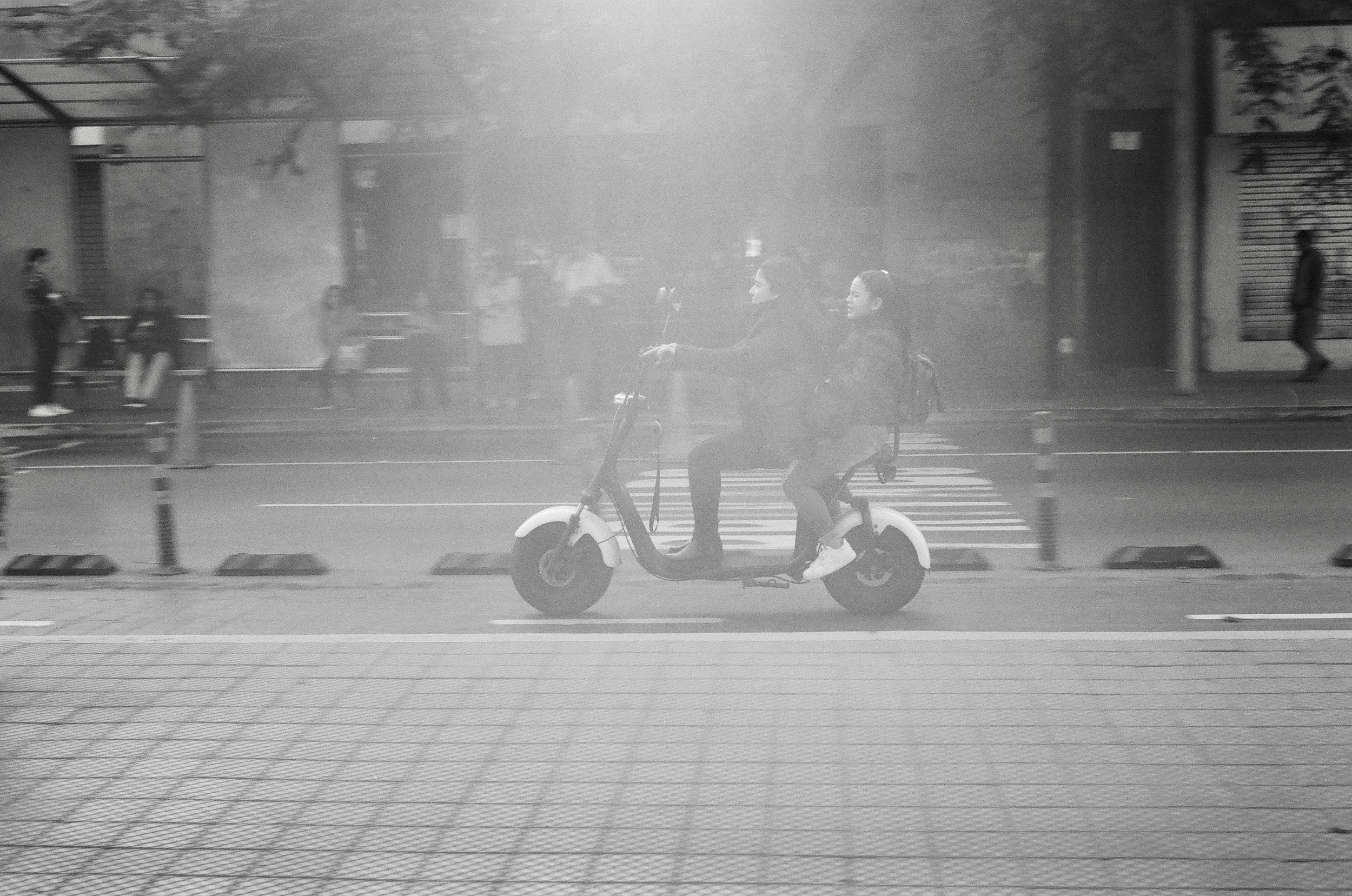
ABOVE: Scooters and bikes abound along the many “ciclovias” in Miraflores and surrounding districts. These protected cycle paths provide cyclists and scooter riders with a level of safety from Lima’s hectic traffic.
This journal entry is a compiled summary of notes and impressions originally recorded in my Moleskine travel journal. Whenever I travel, I bring it along to jot things down so I don’t forget small details. I also carry a small Bluetooth photo printer to print select images (not the ones shown here) and paste them directly into the journal using adhesive-backed photo paper.
It’s a simple, tactile process that complements the slower pace of film photography and helps preserve memories beyond the screen.
Some of the links below are affiliate links. If you choose to use them, it helps support this site at no additional cost to you.